Correcting Online Misinformation to Protect the Critically Endangered Cozumel Raccoon
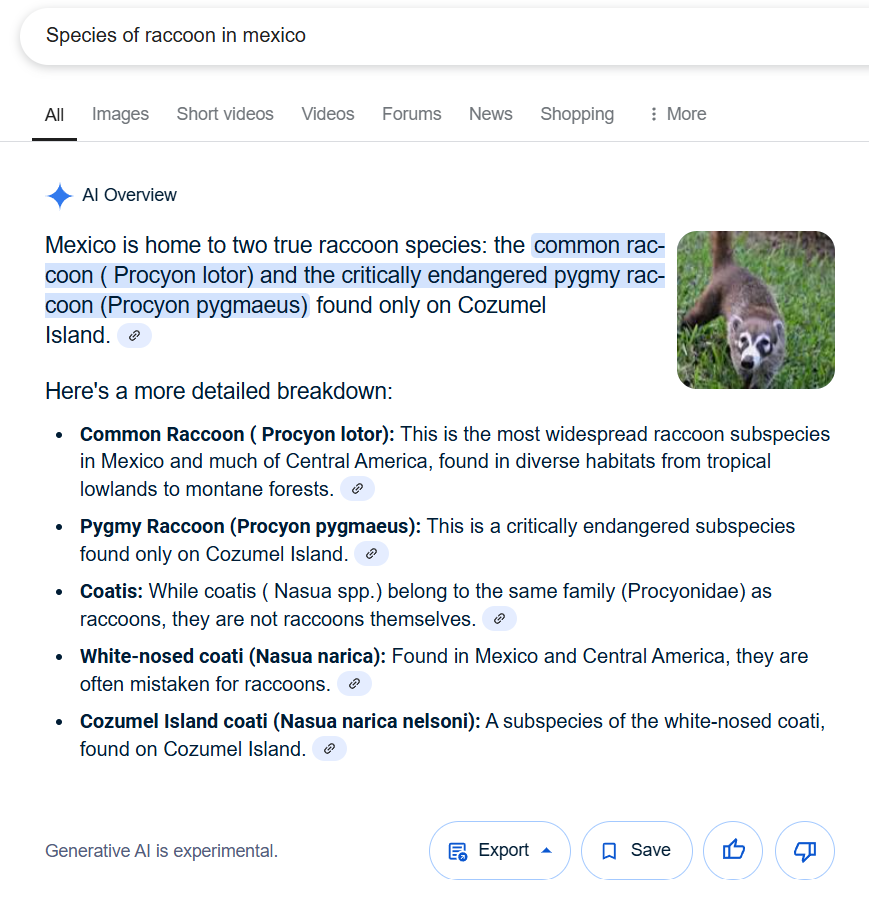
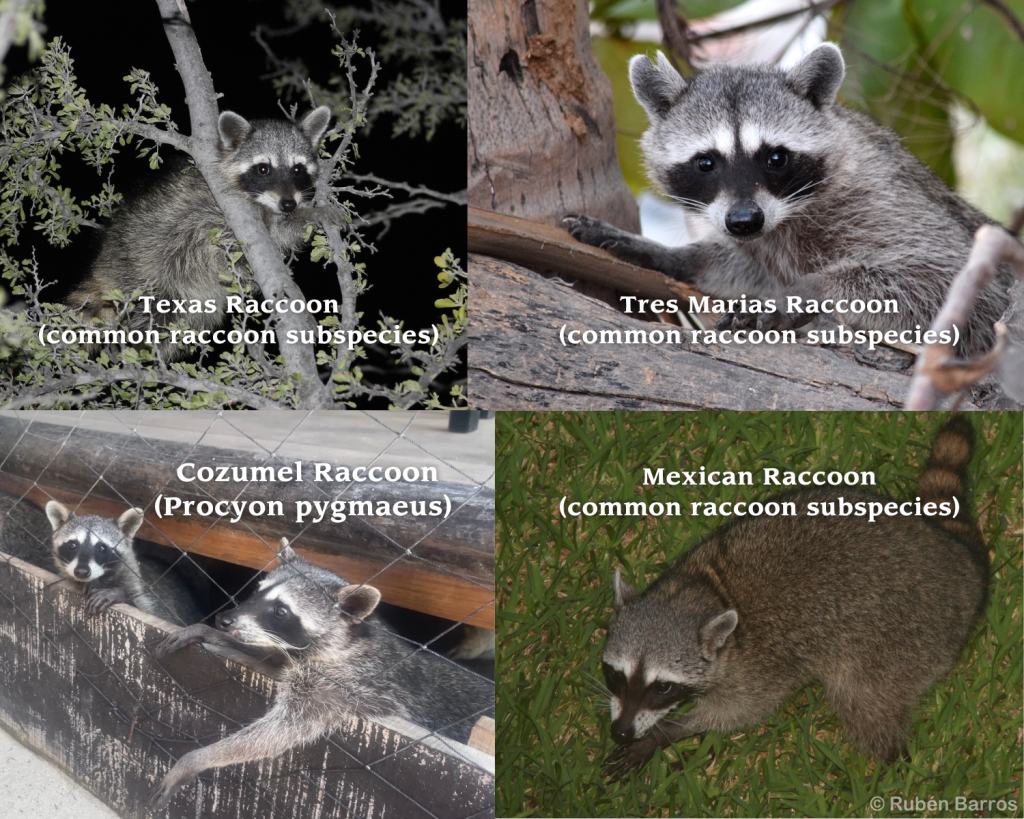
The Cozumel raccoon (Procyon pygmaeus) is one of the most endangered mammals in North America with an estimated of 192 adult individuals left. Yet, when people search for “Mexican raccoons” online, they don’t find information about this endangered species, or even the common raccoon subspecies literally called the Mexican Raccoon. Instead, search engines and AI-generated results incorrectly display white-nosed coatis (Nasua narica)—a completely different animal.
This misclassification erases the Cozumel raccoon from public awareness, making conservation efforts harder to fund, preventing meaningful engagement, and spreading false narratives that hinder wildlife protection.
The Mexican Raccoon SEO Project, created as part of a Conservation and Technology course at Miami University, is a strategic effort to correct online misinformation, boost accurate conservation content, and ensure the Cozumel raccoon gets the recognition it needs to survive.
The Google AI Overview displaying a photo of coati instead of a raccoon while discussing species of raccoons in Mexico
There are two actual species of raccoons in Mexico, the Cozumel Raccoon (Procyon pygmaeus) and the Common Raccoon (Procyon lotor) of which there are several subspecies.
THE PROBLEM:
Google’s Misinformation on Mexican Raccoons
Search engines are misleading the public. When searching for “Mexican raccoons”, users are met with coatis, an entirely different species.
AI-generated overviews worsen the issue. Google’s new AI-generated summaries further reinforce this falsehood, making it even harder to find factual information.
Tourists and potential visitors are misinformed. Many visitors to Cozumel mistakenly believe there are no raccoons on the island, reducing conservation support.
Lack of visibility hurts conservation efforts. If people can’t even find the Cozumel raccoon online, how can they help protect it?
To combat the widespread misinformation surrounding Mexico’s raccoon species, I’m implementing a multi-faceted approach that leverages search engine optimization (SEO), digital media, and public engagement. The efforts focus on ensuring that accurate, science-based information about the Cozumel raccoon is easily accessible to the public.
Developing High-Quality, SEO-Optimized Content
I have have created and published a series of fact-based articles on both the Nature Conscious Tourism Initiative and the Exotic Pet Wonderland websites, designed to improve search rankings and provide reliable information on Mexico’s raccoon species. These include:
Using Google Ad Grants for Cozumel Raccoon Outreach
Through a $10,000 per month Google Ad Grant, NCTI is running targeted digital campaigns to promote accurate information about the Cozumel raccoon. This initiative focuses on reaching audiences in Mexico and the United States, helping to correct misconceptions and raise awareness at a broader scale.
Engaging the Public in Misinformation Reporting
Recognizing the power of collective action, I have developed step-by-step guides for social media platforms such as TikTok, Tumblr, and YouTube. These resources empower users to report inaccuracies in search engine results, directly influencing Google’s algorithms and helping to correct the widespread misclassification of coatis as “Mexican raccoons.”
Expanding Educational Outreach Through Digital Media
I am actively producing educational videos, blog posts, and social media content tailored for a wide audience. By utilizing popular platforms such as YouTube and TikTok, I aim to disrupt misinformation trends and provide accessible, engaging, and scientifically accurate information about the Cozumel raccoon.