See Snow Leopards in the Wild: Conservation Through Ethical Tourism
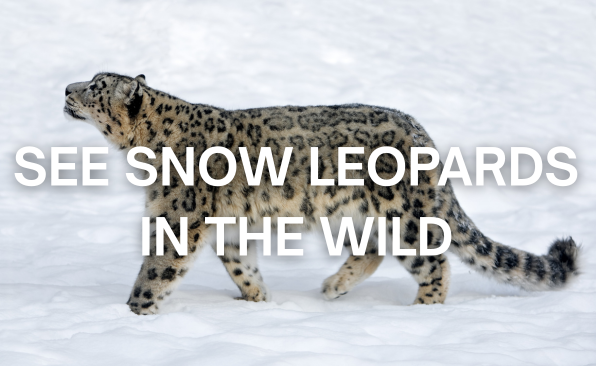
Have you ever dreamed of seeing a snow leopard in the wild? You’re not alone. Each year, travelers from around the world seek out sustainable ways to witness one of nature’s most elusive big cats in its natural Himalayan habitat. Thanks to ethical snow leopard tours led by partners of conservation-focused organizations like Snow Leopard Conservancy, this dream is closer than you might think.
Why Snow Leopard Tourism Matters
In high-mountain regions like Ladakh and Nepal, communities that once faced economic losses from livestock predation now have a powerful reason to protect these animals: responsible tourism provides income. When travelers visit with the goal of seeing a snow leopard, local guides, homestay hosts, and trackers all benefit financially.
This shift creates a strong incentive to safeguard snow leopards instead of harming them. In the past, herders sometimes resorted to retaliatory killings when snow leopards attacked their animals. But now, with support from conservation organizations like the Snow Leopard Conservancy, communities receive help building predator-proof corrals and can earn income by hosting tourists. The presence of ethical tourism gives live snow leopards a tangible value.
When snow leopards bring economic opportunity, communities are far more likely to protect them.
The Role of the Snow Leopard Conservancy
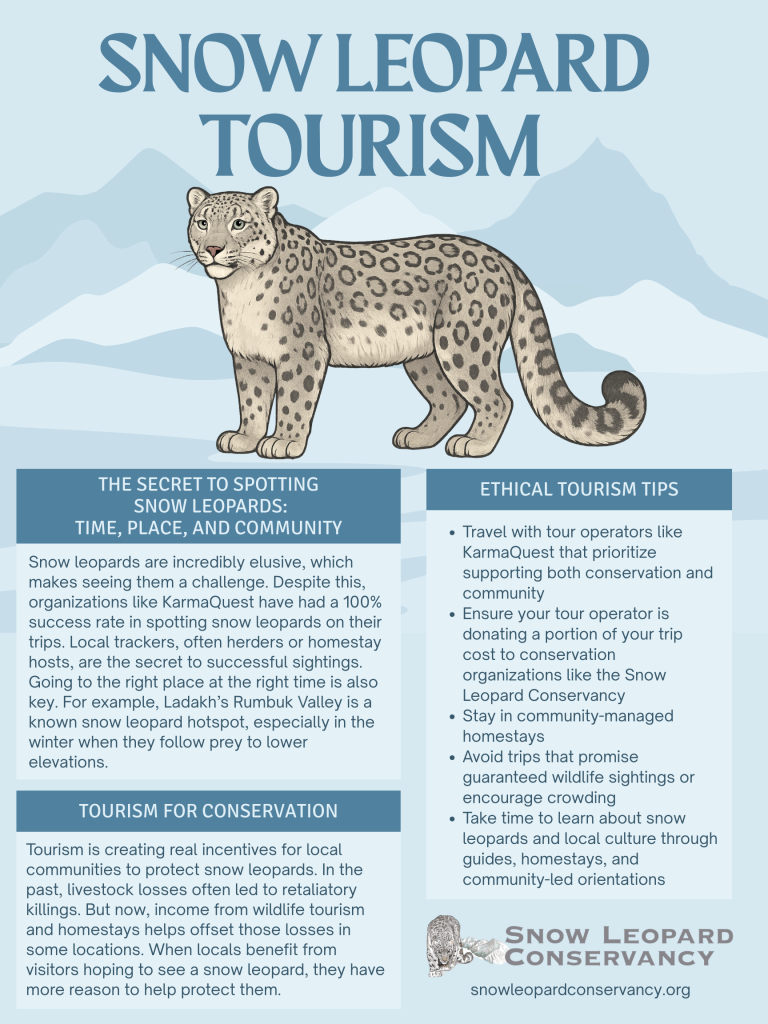
Sustainable, nature conscious tourism in trendy, and searches for “see snow leopards” or “snow leopard tour” have grown in recent years as more travelers seek once-in-a-lifetime wildlife experiences. But snow leopards are not easily found. Native to the remote mountain ranges of Central and South Asia, they typically roam above 12,000 feet and often go unseen for years. Despite this, select ecotour operators like KarmaQuest, in partnership with the Snow Leopard Conservancy (SLC), have consistently offered ethical snow leopard tours with a 100% success rate in sightings.
Although KarmaQuest is up front about snow leopard sightings never being a guarantee during their trips trip, their partnerships with the community and the SLC is the secret to their high success rate in seeing snow leopards.
These efforts are backed by decades of research by Dr. Rodney Jackson, founder of the Snow Leopard Conservancy, and his team. The organization has helped build predator-proof corrals, train local guides, and develop sustainable tourism models that are now used across the Himalayas and Central Asia.
Choosing your Snow Leopard Tour Operator
Not all wildlife tours are created equal. If you’re planning to see a snow leopard in the wild, it’s important to choose a tour operator that prioritizes both conservation and community well-being. A well-run tour both increases your chances of seeing a snow leopard and directly supports the animals and the people who live alongside them.
Here’s what to look for when selecting a snow leopard tour:
Choose operators that work in partnership with snow leopard conservation organizations like the SLC. These operators should contribute a portion of trip costs to conservation projects, such as building predator-proof livestock corrals or training local wildlife trackers.
Look for tours that stay in local homestays and employ community-based guides. This ensures tourism benefits are shared locally, which strengthens long-term support for snow leopard protection.
Avoid companies that promise guaranteed sightings or encourage getting too close to animals. The best tours respect the animals’ space and focus on natural, non-intrusive observation using scopes or camera traps.
Smaller group tours are usually more sustainable and less disruptive. Large tour groups can stress wildlife and overwhelm mountain communities, so look for operators who keep things small and respectful.
Reputable companies provide clear information about their conservation practices and educate travelers about snow leopard behavior, threats, and local culture.
Help Protect What You Love

